Featuring Dr. Sabeel Ahmed 🎤

Remember: Invite 3 people — your neighbors, coworkers, or friends — and join us for an inspiring, friendly day at ICWC 🕌
🎁 Free entry, food & gifts!
👉 tinyurl.com/ICWC-OpenMosque2025

Remember: Invite 3 people — your neighbors, coworkers, or friends — and join us for an inspiring, friendly day at ICWC 🕌
🎁 Free entry, food & gifts!
👉 tinyurl.com/ICWC-OpenMosque2025
Praise be to Allah.
Fasting six days of Shawwal after the obligatory fast of Ramadan is Sunnah Mustahabbah, not wajib. It is recommended for the Muslim to fast six days of Shawwal, and in this there is great virtue and an immense reward. Whoever fasts these six days will have recorded for him a reward as if he had fasted a whole year, as was reported in a sahih hadith from the Prophet (peace and blessings of Allah be upon him). Abu Ayyub (may Allah be pleased with him) reported that the Messenger of Allah (peace and blessings of Allah be upon him) said:
“Whoever fasts Ramadan and follows it with six days of Shawwal, it will be as if he fasted for a lifetime.”Narrated by Muslim, Abu Dawud, At-Tirmidhi, An-Nisa’i and Ibn Majah
The Prophet (peace and blessings of Allah be upon him) explained this when he said: “Whoever fasts for six days after (‘Eid) Al-Fitr has completed the year: (whoever does a good deed (hasanah) will have ten hasanah like it).” According to another report: “Allah has made for each hasanah ten like it, so a month is like fasting ten months, and fasting six days completes the year.” [An-Nisa’i and Ibn Majah. See also Sahih at-Targhib wa’t-Tarhib, 1/421). It was also narrated by Ibn Khuzaymah with the wording: “Fasting for the month of Ramadan brings the reward of ten like it, and fasting for six days brings the reward of two months, and that is the fasting of the whole year.”
The Hanbali and Shafi’i fuqaha’ explained that fasting six days of Shawwal after fasting Ramadan makes it as if one has fasted for an entire year of obligatory fasts, because the multiplication of the reward applies even to nafil fasts, because each hasanah brings the reward of ten like it.
Another of the important benefits of fasting six days of Shawwal is that is makes up for any shortfall in a person’s obligatory Ramadan fasts, because no one is free of shortcomings or sins that have a negative effect on his fasting. On the Day of Resurrection, some of his nafil deeds will be taken to make up the shortcomings in his obligatory deeds, as the Prophet (peace and blessings of Allah be upon him) said:
“The first thing for which people will be brought to account on the Day of Resurrection will be their salah (prayer). Our Lord, may He be glorified and exalted, will say to His angels – although He knows best – ‘Look at the salah of My slave, whether it is complete or incomplete.’ If it is perfect, it will be recorded as perfect, and if something is lacking, He will say, ‘Look and see whether My slave did any voluntary (nafil) prayers.’ If he did some voluntary prayers, [Allah] will say, Complete the obligatory actions of My slave from his voluntary actions.’ Then all his actions will be dealt with in a similar manner.”Narrated by Abu Dawud
And Allah knows best. [1]
Praise be to Allah.
You can start fasting six days of Shawwal from the second day of Shawwal, because it is haram to fast on the day of ‘Eid. You can fast the six days at any time during Shawwal, although the best of good deeds are those which are done soonest.
The standing committee received the following question:
Should fasting the six days be done immediately after Ramadan, following the day of ‘Eid or is it permissible to do it a few days after ‘Eid in the month of Shawwal or not?
They replied as follows:
These days do not have to be fasted immediately after ‘Eid Al-Fitr; it is permissible to start fasting them one or more days after ‘Eid, and they may be done consecutively or separately during the month of Shawwal, according to what is easier for a person. There is plenty of room for manoeuvre in this matter, and this is not obligatory, it is Sunnah.
And Allah is the Source of strength. May Allah bless our Prophet Muhammad and his family and companions and grant them peace. [2]
[3] With regard to the six days of Shawwal after Ramadan, is it a condition that they should be fasted consecutively, or can I separate them? I want to fast them in three sessions, on the two days of the weekend.
Praise be to Allah.
It is not a necessary condition that they should be fasted consecutively. If you fast them separately or consecutively, it is OK. The sooner you do them, the better, because Allah says (interpretation of the meanings):
“So compete in good deeds.”Al-Qur’an 5:48
“And march forth in the way (which leads to) forgiveness from your Lord.”Al-Qur’an 3:133
“[Musa – peace be upon him – said:] … and I hastened to You, O my Lord, that You might be pleased.”Al-Qur’an 20:84
And (you should hasten to fast these six days) because delaying may cause problems. This is the view of the Shafi’is and some of the Hanbalis, but it is OK if you do not hasten it and you delay it until the middle or end of the month.
An-Nawawi (may Allah have mercy on him) said:
“Our companions said: it is mustahabb to fast six days of Shawwal. Because of this hadith they said: it is mustahabb to fast these days consecutively at the beginning of Shawwal, but if one separates them or delays them until after Shawwal, this is permissible, because he will still be following the general guidelines of the hadith. We have no dispute regarding this matter, and this was also the view of Ahmad and Dawud.”Al-Majmu’ Sharh al-Muhadhdhab
Furthermore “… although the majority of the scholars didn’t obligate the six days of Shawwal to have to be immediate, or six consecutive days, it is easier and safer to do it that way and you will avoid any differences between the scholars that way. However, the matter is flexible, so whenever you can.” [4]
Praise be to Allah.
The precise rewards for the deeds which people do for the sake of Allah is something which is known only to Allah. If a person seeks the reward from Allah and strives to obey Him, his reward will not be lost, as Allah says (interpretation of the meaning):
“We shall not make the reward of anyone who does his (righteous) deeds in the most perfect manner to be lost.”Al-Qur’an 18:30
If someone has missed some of the days of Ramadan, he should fast them first, then fast six days of Shawwal, because he cannot follow the fast of Ramadan with six days of Shawwal unless he has completed his Ramadhan fast. [5]
Furthermore: [4]
If someone fasts six days of Shawwal, then one year he gets sick or something prevents him from fasting, or he is too lazy to fast, will there be any sin on him? We have heard that if a person fasts these six days one year, he must never give up this practice thereafter.
Praise be to Allah.
Fasting six days of Shawwal after the day of ‘Eid is Sunnah. It is not wajib (obligatory) on the person who does this once or more often to continue doing it. He is not guilty of a sin if he does not fast these days.
And Allah is the Source of strength. May Allah bless our Prophet Muhammad and grant him peace. [6]
There is a temptation (and I guess a belief) that one can start making up their obligatory fasts now and at the same time make a dual intention for the six days of Shawwal too, on the same single day, to try and kill two birds with one stone. This is incorrect, and is a minority opinion.
Although this is something permissible for general matters such as combining the intention for tahiyyat al-masjid and the sunnah of wudhu’ and the two sunnah before dhuhr for example, or combining the intention for the voluntary fast of Monday and the fast for the middle three bright days of the lunar month etc., it is not correct to do it in *this* qadha’/Shawwal case because you have (a) a specific obligation to make up and (b) a specific voluntary fast to perform, which require separate intentions and focus, quite apart from the fact that the hadith concerning the six days of Shawwal makes it clear that they follow the fasts of Ramadan, and that would not be possible if the fast itself is both an owing Ramadan fast *and* a Shawwal fast at the same time.
Thus, these must be done separately. As I have mentioned above, it is best that one does the obligatory qadha’ missed fasts first, and then the six days of Shawwal separately afterwards. Or, they do the six days of Shawwal now and then do the qadha’ afterwards. But not together on the same day with the same intention.
This is the position of the vast majority of the scholars. Wallahu a’lam. [4]
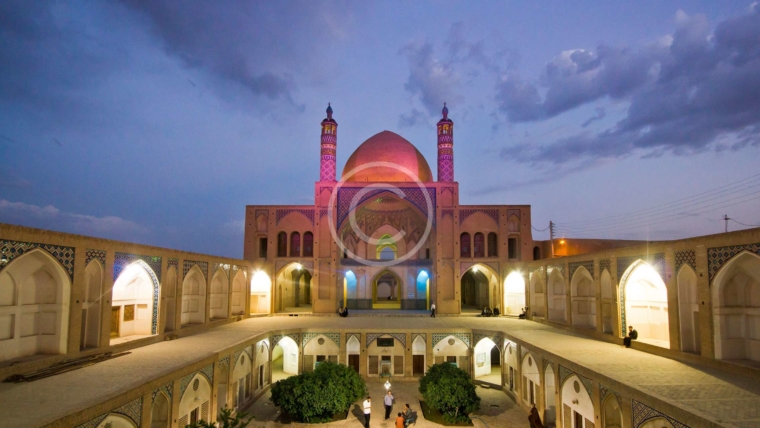
Islam makes certain times and places especially sacred. While a believer can certainly engage in worship such as remembering or glorifying God at any time (“standing, sitting or lying on their sides”[1]), some periods of time have special and unique blessings associated with them. Similarly, while the entirety of the Earth has been made a place of worship and prostration, there are some locations (such as the three Mosques) that are uniquely blessed. This creates within the psychology of the believer a yearning to seek out these unique opportunities in order to come closer to Allah. That yearning brings about several positive spiritual emotions: awe, reverence, wonder, anticipation, eagerness, excitement, hope, and longing, all of which are encompassed in the term shawq.[2]
As we live today in an era of digital distractions and materialistic heedlessness, often acts of worship are squeezed into brief moments in our daily routine, which does not furnish one with a complete transformative spiritual experience. Serious worship requires not just taking a brief moment to pray, but allowing our prayers to define our direction in life. Thus, Islam offers opportunities for intense spiritual experiences, experiences that involve setting aside the dunya (worldly life) and its distractions. Of the greatest of such opportunities are the blessed nights of Ramadan. The Prophet Muhammad ﷺ said, “Whoever spends the nights of Ramadan in prayer out of faith and in the hope of reward, he will be forgiven his previous sins.”[3] The foremost of these opportunities are the last ten nights of Ramadan. As the Prophet’s wife `A’isha narrates, “When the last ten nights began Allah’s Messenger (peace be upon him) kept awake at night (for prayer and devotion), wakened his family, and prepared himself to observe salah (with more vigor).”[4] It is no coincidence that i`tikaf (seclusion in the masjid) is also recommended in Ramadan. The Prophet Muhammad ﷺ used to practice i`tikaf for the entirety of the last ten days of Ramadan.[5]
By far however, there is no day or night that has been emphasized more than the night known as laylat al-qadr (the Night of Decree). The Qur’an’s 97th chapter is dedicated entirely to this night:
Indeed, We revealed [the Qur’an] during the Night of Decree. And what can make you know what is the Night of Decree? The Night of Decree is better than a thousand months. The angels and the Spirit descend therein by permission of their Lord for every matter. Peace it is until the emergence of dawn. (97:1-5)
The companion Anas ibn Malik reported: “Ramadan approached, so the Messenger of God said: ‘This month has come to you, and in it there is a night that is better than a thousand months. Whoever is deprived of it is deprived of all goodness, and no one is deprived of its goodness except one who is truly deprived.’”[6]
The precise night on which Laylatul-Qadr occurs has not been mentioned. The Prophet Muhammad ﷺ said, “Search for Laylatul-Qadr in the odd nights of the last ten nights of Ramadan.”[7] There is a tremendous wisdom behind not knowing exactly when it occurs, which scholars have pointed out. As Ibn Qudamah al-Maqdisi (d. 620 H) writes:
God has concealed this night from the ummah so that they may strive in seeking it and performing worship throughout the month in the hopes of catching it. Similarly, He concealed the hour of special acceptance on Friday so that one would increase in their supplications throughout the day, and He concealed His Greatest Name (ism al-a’dham) amongst His Divine Names and His Pleasure with acts of obedience so that people would strive for them. And He concealed an individual’s lifespan and the Hour [of the Day of Judgment] so that humanity would continuously strive in good deeds, being heedful of them.[8]
Islamic scholars differ regarding the meaning behind the name of ‘Laylatul-Qadr’, as the word ‘Qadr’ can hold a variety of meanings, and each has its own theological significance.
Some scholars defined ‘Qadr’ in the context of this holy night as ‘destiny/decree’ (qadar). To them, this meant that this was the night in which the destiny of each person was decided. It would be this night in which a person’s sustenance, lifespan, and other critical matters would be sealed for the coming year.
In support of this, ‘Abdullah ibn Abbas (may Allah be pleased with him) said: “It is written in Umm al-Kitab (the Heavenly copy of the Qur’an) during Laylatul-Qadr what shall come to pass in the following year of good and evil, sustenance, and lifespan. Even the pilgrimage of the pilgrim (shall be decided); it will be said ‘so-and-so will perform pilgrimage’ (on this night).”[9]
Al-Hasan Al-Basri (d. 110 H), Mujahid (d. 104 H) and Qatadah (d. 117 H)—three renowned early Muslim scholars—shared this view and were reported to have said that “all the affairs of lifespan, deeds, creation, and provision are decreed on Laylatul-Qadr in the month of Ramadan and will come to pass in the coming year.”[10]
Imam Al-Nawawi concluded his discussion on Laylatul-Qadr by saying: “It was named Laylatul-Qadr, meaning: the night of judgment and discernment (in the affairs of men). This meaning is what is true and popular.”[11]
Other scholars defined the meaning of ‘Qadr’ as ‘power,’ indicating the greatness of the honor and might of the night.[12] Similar to this view is the interpretation of ‘Qadr’ as ‘power’ in that the righteous deeds performed during this night are far more powerful than they would be on any other night.
Ibn ‘Uthaymeen said: “A person would attain the reward of the night, even if he has no knowledge of it. This is because the Prophet said ‘whoever stands (in prayer) during Laylatul-Qadr, with faith and hope, will be forgiven,’ and the Prophet did not make knowledge of the night a condition of their forgiveness. And had knowledge of the night become a necessary factor, the Prophet would have made this clear.”[13]
In this view, since knowledge of the night is not a prerequisite to prospering from the night, then it is not required for the worshipper to understand concepts of destiny or decree in order to achieve the rewards of worshipping on this night. All they need to do is perform acts of worship on that night.
Another meaning of ‘Qadr’ in the context of Laylatul-Qadr, involves the meaning of ‘restriction.’ This is understood to indicate that the earth becomes restricted as angels descend to the earth on the holy night, occupying the earth. This descent of the angels is referenced in the Qur’an, and since angels are typically associated with concepts such as light, guidance, and blessings, it is a symbol of how majestic Laylatul-Qadr is.[14] Furthermore, since angels occupy the highest heavens, they are described in the Qur’an as ‘close to God’; yet on Laylatul-Qadr they are ‘seeking permission’ from God to descend to earth in recognition of the divine blessings that God places on earth during this night.[15] In one narration, the Prophet ﷺ stated: “Truly the angels on this night are as numerous as the pebbles upon the earth.”[16]
Laylatul-Qadr has also been described as a gift for the Prophet Muhammad’s community (ummah). In the Muwatta of Imam Malik, there is a hadith that states: “The Messenger of Allah, may Allah bless him and grant him peace, was shown the lifespans of the people (who had gone) before him, or what Allah willed of that, and it was as if the lives of the people of his community had become too short for them to be able to do as many good actions as others before them had been able to do with their long lives, so Allah gave him Laylat al- Qadr, which is better than a thousand months.”[17]
In addition to the aforementioned significance related to Divine decree and providing the Prophet’s ummah with a unique opportunity for worship, there is also a special connection that Laylatul-Qadr has with the Qur’an. In Surah al-Qadr (97:1) and Surah al-Dukhan (44:3), it is mentioned that the Qur’an was revealed on this night. Ibn Abbas has explained this by mentioning on Laylatul-Qadr that the Qur’an was revealed in its entirety from the highest heaven to the lowest heaven, and placed in a special chamber called Bayt al-`Izzah (the House of Honor). From there, it was revealed gradually over the course of twenty three years to the Prophet Muhammad.[18] This was in order to emphasize the lofty status of the revelation and to announce to the inhabitants of the Heavens that this was the final revelation.[19] It is also mentioned by other scholars, such as Imam al-Sha’bi (d. 105 H), that the revelation of the Qur’an to the Prophet Muhammad began in the month of Ramadan on Laylatul-Qadr when Jibreel first descended to visit the Prophet Muhammad.[20]
What is the connection between Laylatul-Qadr being the night of decree, and also being the most virtuous night to pray on? Why is the night when angels descend with the decree also the best night to worship in?
One possible answer to this can be found in the explanation (tafsir) of the opening passage of Surah ad-Dukhan:
Hā, Meem. By the clear Book, verily, We revealed [the Qur’an] during a
blessed night. Indeed, We have always forewarned humankind. On that night, every wise decree (amr hakeem) is specified, by Our command. Surely, We have always been sending [messengers] as a mercy from your Lord, indeed He is the All-Hearing, All-Knowing.(44:1-6)
This passage reiterates the significance of Laylatul-Qadr as the night during which the fates, destinies, and decrees are sent down for the forthcoming year. The famous Qur’anic commentator, Abu’l-Thana’ al-Alusi (d. 1270 H/1854 CE), notes in his tafsir that when God says, “On that night, every hakeem decree is specified,” one of the meanings of hakeem is mukham (decisive) which entails that “this decree cannot be changed after it descends, in contrast to before that.”[21]
If a person reflects on all the things that could potentially happen to them in the coming year, they will experience immense hope and/or fear. Perhaps in the coming year they may experience—God forbid—the loss of a loved one, the onset of a debilitating illness, a bitter conflict, destruction of property, or worst of all the loss of their faith and connection to God.
Or perhaps in the coming year they may experience great joy and closeness with their family, the most successful achievement in their career, bliss in their marriage, a solution to old problems, new friendships and prosperity, or best of all growth in their relationship with the Divine. When a person reflects on this, he or she realizes that Laylatul-Qadr provides the perfect opportunity to pray for the realization of their best dreams, and the prevention of their worst nightmares. This is the night when that yearly decree is finalized. In a sense, this is that night when one’s fate is ‘downloaded’ from the heavens.
Just as a person awaiting the decree of a judge in the courtroom prays most intensely at the moment when that decree is about to be decided, likewise Laylatul-Qadr may signal that final opportunity to change one’s fate (taqdeer). After that, a person’s taqdeer in the record of the angels is only changed if it was written from before that it would be changed. The hadith scholar, Ibn Hajar al-`Asqalani (d. 854 H) notes the difference between the contingent decree (al-Qada’ al-Mu’allaq) which God has given the angels and the irrevocable decree (al-Qada’ al-Mubram) which is with God.[22] The recording of one’s fate which the angels possess can be subject to change, as the Qur’an states “God erases and confirms what He wills” (13:39) and the Prophet Muhammad ﷺ said, “Nothing averts fate except supplication (la yaruddu al-qadar illa al-du’a).”[23] However, one’s record with God in the Preserved Tablet (al-Lawh al-Mahfudh) is immutable. Thus, a person praying on Laylatul-Qadr may result in their records with the angels being altered, before those records seal one’s fate for the coming year. Du’a on this night has the greatest power to change decree, hence the night is both the Night of Power and the Night of Decree.
There is also a special link between this night and seeking forgiveness from God. A’isha asked the Prophet, “O Messenger of Allah! If I knew which night is Laylatul-Qadr, what should I say during it?” And he instructed her to say:
اللَّهُمَّ إِنَّكَ عُفُوٌّ كَرِيمٌ تُحِبُّ الْعَفْوَ فَاعْفُ عَنِّي
O Allah! You are Most Forgiving, and you love to forgive. So forgive me.[24]
The Prophet ﷺ instructed us to call out to Allah using the Divine name al-Afuww (The Most Forgiving) on this night, and this has a special connection with Qadar. The linguistic meaning of this Divine Name is explained by noting that the root of ‘afuw (forgiveness) linguistically connotes erasure (al-mahuw) and effacement (al-tams).[25] Thus, our prayers to Allah on this night are explicitly connected to a plea for Him to erase the consequences of our misdeeds. The Qur’an states that Allah’s ‘afuw protects calamity from being decreed for us as a result of our sins:
And whatever strikes you of calamity (museebah), it is because of what your hands have earned, although He pardons (ya’fuw) a great deal.(42:30)
So the decrees on Laylatul-Qadr may be descending with calamities that are consequences of our sins, and on this night we have an exclusive opportunity to invoke the forgiveness of al-Afuww to erase those sins as well as the resultant decree, and remove them from our fates for the upcoming year.
As Laylatul-Qadr is certainly the most blessed night of the year, a person who misses it has certainly missed a tremendous amount of good.[26] Many scholars mentioned that what’s to be avoided beyond sin is wasting time on that precious night, unnecessary socializing with people, arguing, shopping, etc. One should keep in mind that the night technically starts at Maghrib (sunset), and be heedful of how time is spent from that point onwards. If a believing person is keen to obey his Lord and increase the good deeds in his record, he should strive to spend this night in worship and obedience. If this is facilitated for him, all of his previous sins will be forgiven.
Suratul-Alaq, which was revealed on this blessed night, begins with the command to read the Qur’an, and ends with the command to prostrate and draw close to your Lord. In that is a Divine prescription for how the night is to be spent. Ash-Shafi’i (d. 204 H) said that some of the pious predecessors preferred to spend this night in prayer, some in Quran, some in dua, and all are rewarded by Allah.[27] This also shows the importance of intention in that even if you don’t catch the night for some reason out of your control, you will still be fully rewarded for it. While it is best to perform full i’itkaf (i.e., seclude yourself in the masjid for the entirety of the 10 days), there are many important things one can do even if one is unable to engage in i’tikaf.
Merely praying Isha and Fajr in congregation on that night is enough to fill its scales. The Prophet ﷺ said: “Whoever attends Isha prayer in congregation, then he has the reward as if he had stood half of the night. And whoever prays Isha and Fajr in congregation, then he has the reward as if he had spend the entire night standing in prayer.”[28] Moreover, Imam Malik (d. 179 H) narrated that he had heard that Said ibn al-Musayyab (d. 94 H) used to say, “Whoever is present at Isha on Laylatul-Qadr has taken his portion from it.”[29]
If one is able to do more than that, the next step involves performing extra voluntary prayers during the night. The Prophet Muhammad ﷺ said, “Whoever stands in prayer during Laylatul-Qadr with faith and hope in the reward of Allah, all of his previous sins will be forgiven.”[30]
Finally, as mentioned earlier, the supplication the Prophet ﷺ advised his wife A’isha to make on that blessed night is a prayer for an all-encompassing forgiveness that involves invoking Allah’s love for forgiveness.[31]
Here lies a benefit to the believer in discovering their own love to forgive as they invoke Allah’s love of forgiveness. The Prophet Muhammad ﷺ stated to his companions: “I came to inform you of the (specific) night of Laylatul Qadr but found so-and-so arguing and (in the process of mediating) had the knowledge of the night lifted from me.”[32] Since the Prophet’s knowledge of the specific night of Laylatul-Qadr was taken from him due to internal fighting between two individuals, this serves as a reminder that the grudges between mankind veils them from attaining the pardon and forgiveness of the night. For just as the Prophet was veiled from knowing the night due to the grudges between others, it is by offering forgiveness to others, and overlooking each other’s faults, that we discover the forgiveness of Allah during Laylatul-Qadr.
And in the equation of success found in the limited efforts of that one night, is the embedded infinite mercy found in the eternal pathway to salvation. The same God who commands you to seek His pardon willingly offers it to you for an effort that can be performed even by the youngest and weakest amongst us. The same God who created you with limited years to do good, gives you days and nights that are equivalent to lifetimes of worship. And the same angel, Jibreel, that He sent to honor the Prophet ﷺ that night is sent to the earth that same night annually to honor his nation.
[1] Qur’an 3:191.
[2] The Prophet used to supplicate, “O Allah, I ask you for the sweetness of seeing Your Face, and the eagerness (shawq) of meeting you” (Sunan an-Nasa’i 1305). Ibn al-Qayyim describes shawq as “the journey of the heart in seeking its beloved” (Tareeq al-Hijratayn, Dar `Alam al-Fawa’id, vol. 1, p. 723).
[3] Sunan an-Nasa’i 2192.
[4] Sahih Muslim 1174.
[5] Sahih Muslim 1171.
[6] Sunan Ibn Majah, 1644.
[7] Sahih Bukhari, 2017.
[8] Ibn Qudamah,al-Mughni (Dar `Alam al-Kutub), vol. 4, p. 453.
[9] Tafsir al-Baghawi 7/227-228.
[10] Al-Bayhaqi, Kitab Fada’il Al-Awqat, 213.
[11] Al-Majmoo’ Sharh Al-Muhadhab, 6/447.
[12] Tafsir Al-Baghawi, 8/48.
[13] Sharh Al-Mumta’, 6/494.
[14] Quran, 97:4.
[15] Quran, 4:174.
[16] Musnad Ahmad, 10734.
[17] Muwatta Malik, 19:706. On the basis of this narration, some scholars, like Ibn `Abdul-Barr and al-Nawawi, asserted that the virtuous reward of this night was exclusive to Prophet Muhammad’s ummah, although other scholars like Ibn Kathir and Ibn Hajar al-`Asqalani did not consider it exclusive (see Al-Zarqani, Muhammad Abdul-Baqi. Sharh al-Zarqani `ala Muwatta Malik, 2003, p.326).
[18] Mustadrak al-Hakim 3781, Sunan al-Nasa’i 11625, Sunan al-Bayhaqi 8521. Ibn Taymiyyah explains that this revelation from a written form (in Lawh al-Mahfudh) to a written form (in Bayt al-`Izzah) does not negate the Angel Jibreel hearing the Qur’an directly from Allah and bringing it to the Prophet (Majmu al-Fatawa 12/126-7). Thus we have the oral revelation of the Qur’an, and the written revelation of the Qur’an.
[19] Badr al-Deen al-Zarkashi, Burhan fi Ulum al-Qur’an, vol .1, p. 230.
[20] Manna’ al-Qattan, Mabahith fi `Ulum al-Qur’an, p. 97. He explains that both of these opinions are in fact correct and compatible.
[21] Al-Alusi, Abu’l-Thana’. Ruh al-Ma’ani (tafsir of verse 44:4).
[22] Al-‘Asqalani, al-Hafiz b. Hajar. Fath al-Bari li sharh sahih al-Bukhari. (Cairo: Dar al-Rayyan li al-Turath, 1986) vol. 10, p. 430.
[23] Sunan Ibn Majah, 1:95.
[24] Jami’ al-Tirmidhi, 3513.
[25] Lisan al-`Arab, 4/3019.
[26] The majority of scholars are of the opinion that Laylatul-Qadr may occur on any of the odd nights in the last ten nights of Ramadan, thus demonstrating the importance of practicing a consistent amount of worship for all of these nights. Ibn Taymiyyah made the interesting point that the “odd nights” could be counted from the beginning or the end of the month (e.g., the 28th night could be considered the third last night of a 30 day Ramadan and hence also odd), and therefore one should endeavor to strive in all ten nights (Majmu’ al-Fatawa 25/284-285).
[27] This is especially important to note for women who are on their period and unable to perform Qiyam since the rewards of the night are still fully available to them.
[28] Jami’ Tirmidhi, 221. Similarly in Sahih Muslim, 656a.
[29] Muwatta Malik, Book 19, Hadith 707.
[30] Sahih Bukhari, 1901.
[31] Jami’ al-Tirmidhi, 3513. Discussed earlier in the article, p. 9.
[32] Sahih Bukhari, 49.
Disclaimer: The views, opinions, findings, and conclusions expressed in these papers and articles are strictly those of the authors. Furthermore, Yaqeen does not endorse any of the personal views of the authors on any platform. Our team is diverse on all fronts allowing for constant enriching dialogue that helps us produce only the finest research.
Copyright © 2018. Yaqeen Institute for Islamic Research
Do they not then reflect on the Quran? Or are there locks upon their hearts?
(Quran 47:24)
The Quran is a guide to humanity. Since none of us want to be misguided, it is paramount not only to read or recite the Quran, but to understand and implement it in our lives as well.
Following are the top 10 things you are missing every day in your life if you don’t understand the Holy Quran:
If you don’t understand Quran and keep on reading it, the very purpose of revelation is lost. Allah SWT says: “This is˺ a blessed Book which We have revealed to you ˹O Prophet˺ so that they may contemplate its verses, and people of reason may be mindful”. [38:29]
How can we do that if we don’t understand the Quran! One cannot and does not carry translation always, especially while listening to it in the prayer/salah!
The mind is like a garden. If we don’t sow flowers, weeds will grow. Even if we sow flowers, weeds will still grow. We will need to remove the weeds continuously.
Flowers are the Guidance and the weeds are satanic thoughts. Allah SWT sows flower seeds into our brain every time we listen to Quran, especially in the prayer/salah. If we don’t water them (ponder), they will be wasted and weeds may grow.
There are 5 objectives of Reading Quran:
How can we achieve all of these, especially the last four, if we don’t understand the Quran?
People know that Fajr is compulsory but very few come to Masjid. Why? Not because they don’t know but because their hearts are rusted. We have a major misconception that Quran is a book of commandments only. The verses that deal with commandments constitute less than 10% of the total verses. The rest 90% is for the heart and mind. The heart keeps rusting and deviating because of sins. We need de-rusting and re-alignment.
Prophet Adam (peace be upon him) was asked not to go near the tree. Allah says: “but he forgot; and We did not find in him any determination”. We humans have these weaknesses. We have several Fitnahs (trials) surrounding us. We need continuous reminders and warnings which come to us only through daily recitation and listening to the Quran. Allah says about the Quran: “a healing for the (diseases) in your hearts” [10:57]. Can there be a better cure than what Allah has prescribed for us?
The Quran was revealed to the prophet (ﷺ) in pieces. “And those who disbelieve say: Why has not the Quran been revealed to him all at once?” Thus, that We may strengthen your heart by it and We have arranged it well in arranging. [25:32]. Heart should be firm in belief to His promises and warnings. Continuous pondering of the Quran everyday during and after Salahs helps us strengthen our hearts.
Prophet Muhammed (ﷺ) used to interact with the recitation. “And when he recited the Verses which referred to the Glory of Allah, he glorified Him, the Great, and when he recited the Verses that mention supplication, he supplicated, and when he recited the Verses that mention seeking Refuge of the Rabb, he sought (His) Refuge”. [Sahih Muslim].
Can we live without talking at least five minutes every day to our near and dear ones? Allah is most beloved to us. He loves us more than seventy times that of our mothers. Still we live without bothering as to what Allah SWT said today to us during prayer/salah!
Whatever we read or listen to the Quran, remember that it is a live guidance from Allah SWT to each individual when he or she listens to Quran. It is a huge loss only if one cannot appreciates the value of live guidance from Allah, our own Creator. A wise man can never neglect this.
There are different dimensions to the relationship with Allah – His Love, Sincerity, Trust in Him, Remembering Him directly and whenever we see His signs in creation, Pondering His creation and in His names, not complaining of Qada, etc. This relationship is strengthened over time. It requires slow and steady cooking with regular heat coming from Quran.
According to Aisha (R), “His (the Prophet ﷺ) morals were the Quran”. The Quran is theory and the Prophet’s life was practical demonstration of that theory (thee Quran). We need to study the Seerah of the Prophet (ﷺ) and keep relating the verses that we study to his life. This is a project in itself and requires one to ponder the verses every day along with the Seerah of the Prophet (ﷺ).
As a patient starts describing his problems, the doctor’s mind starts working on diagnosis and comes up with the relevant medicines. Similary, we come across many situations in our life. We should be able to see solutions in the Quran corresponding to these situations. Only through continuous pondering and relating it to the daily life, one can attain this vision.
Source: UnderstandQuran.com newsletter